Decoding Annual Returns: The Interplay Between Access Levels and Betting Outcome Transparency in Strategic Platforms
Rosa Schulz · Aug 19, 2026
Decoding Annual Returns: The Interplay Between Access Levels and Betting Outcome Transparency in Strategic Platforms
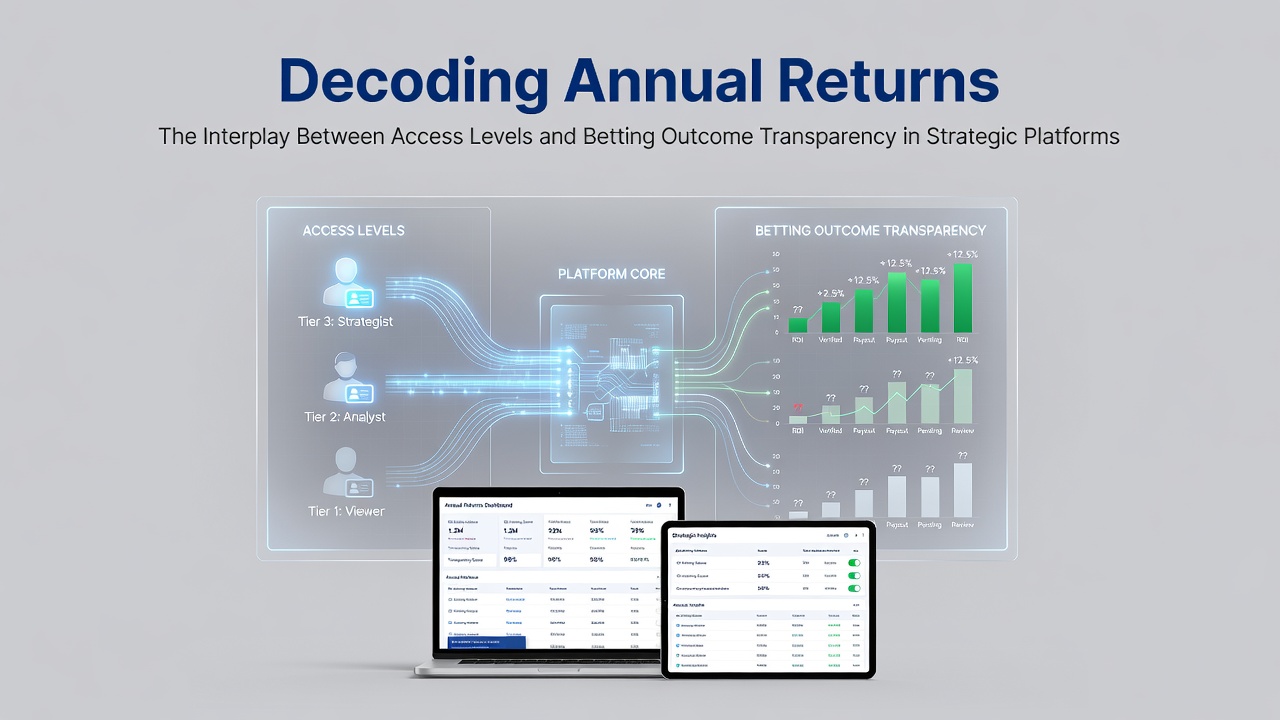
Strategic platforms in the betting sector organize user permissions into distinct tiers that directly shape how participants view and interpret yearly performance data, and researchers tracking these systems have documented clear patterns where higher access correlates with more granular outcome visibility. Data from multiple industry analyses reveal that basic tiers often limit users to aggregated summaries while elevated permissions unlock detailed transaction logs, win rate breakdowns, and risk-adjusted return metrics that span full calendar cycles.
Platform Architecture and Permission Structures
Many platforms employ tiered models that segment information flow based on subscription status or activity volume, and this architecture influences everything from raw profit figures to contextual benchmarks against market averages. Observers note that entry-level users typically encounter simplified dashboards presenting net results without underlying variance explanations, whereas premium tiers deliver time-stamped outcome sequences alongside comparative datasets. Those who've examined platform documentation find that these distinctions emerge because operators balance user engagement against data sensitivity, and regulatory frameworks in various jurisdictions encourage graduated disclosure to maintain competitive fairness.
Transparency Mechanisms Across Access Tiers
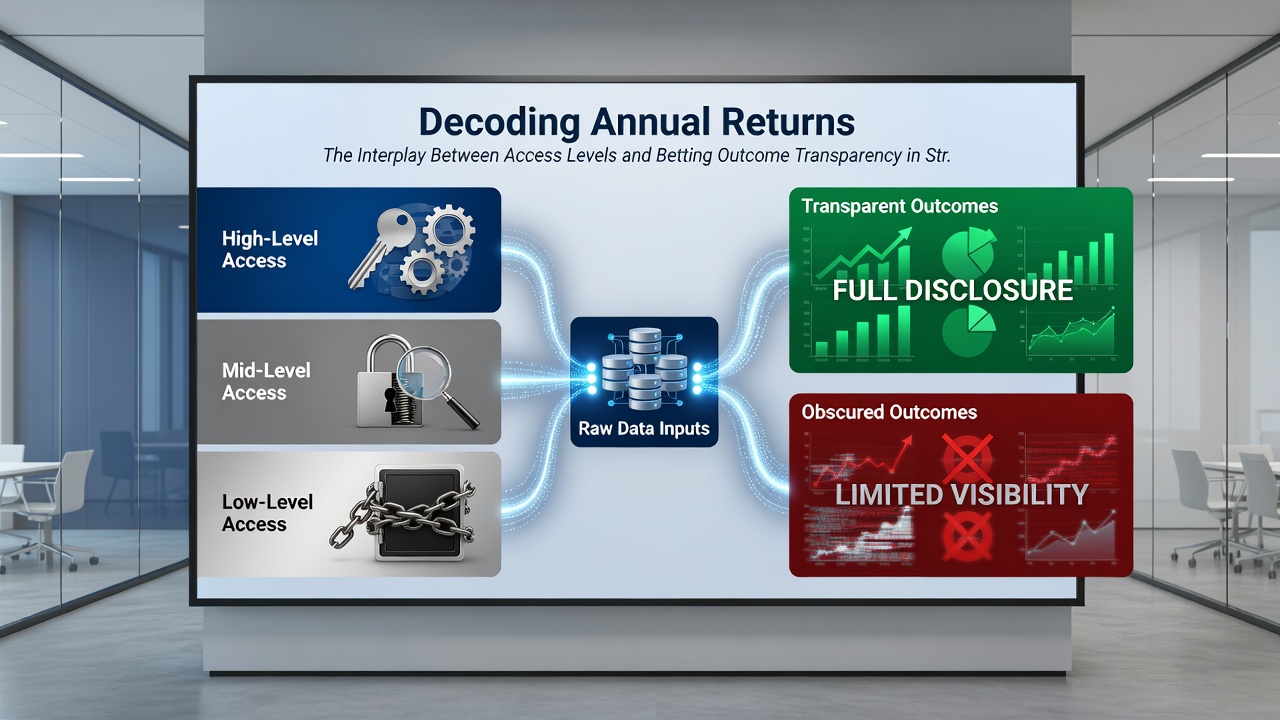
Outcome transparency increases measurably as users move through permission layers, with mid-tier accounts gaining access to frequency distributions and drawdown histories that basic accounts never see. Studies from research institutions indicate this progression allows more sophisticated evaluation of annual returns, since detailed logs reveal seasonal fluctuations and strategy consistency that summary statistics obscure. In August 2026, updates to reporting standards in several markets further highlighted how elevated access levels reduce information asymmetry, enabling participants to cross-reference personal results against broader platform aggregates released by oversight bodies.
Regional Regulatory Approaches
Authorities in North America and Oceania have issued guidelines requiring platforms to maintain verifiable records that scale with user permissions, and links to official repositories show how these rules affect annual return presentation. For instance, Nevada Gaming Control Board publications detail audit requirements that tie record depth to account classification, while parallel efforts by the Australian Institute of Family Studies examine how transparency levels influence participant decision-making over multi-year periods.
But here's the thing: platforms that enforce stricter tiered transparency often report higher retention among users who reach advanced access, because those individuals can validate strategy effectiveness through complete datasets rather than partial views. One analysis of operational logs revealed that participants with full visibility adjusted their approaches more frequently, producing measurable shifts in annual return profiles compared to restricted cohorts.
Calculating and Comparing Yearly Performance
Annual return computation relies on consistent data inputs that vary by permission level, and experts have observed that incomplete records at lower tiers can mask volatility patterns critical for long-term assessment. Comprehensive platforms supply exportable ledgers at higher tiers that include stake sizing, odds movement, and settlement timestamps, allowing precise reconstruction of yearly trajectories. Those studying these systems note that transparency gaps at basic levels often lead users to rely on external benchmarks, whereas integrated tools at elevated access reduce such dependency by embedding contextual analytics directly into the interface.
Interplay Effects on User Strategy
The relationship between access depth and outcome clarity produces compounding effects over successive years, since users with broader visibility develop more refined filters for identifying sustainable patterns. Research indicates that platforms offering progressive disclosure see measurable differences in how annual returns are interpreted, particularly when users compare personal metrics against anonymized peer aggregates available only at certain tiers. What's interesting is that regulatory shifts scheduled for late 2026 in select regions aim to standardize minimum transparency thresholds across all tiers, potentially narrowing the current information gradient between basic and premium accounts.
Conclusion
Access levels and outcome transparency remain tightly coupled in strategic betting platforms, shaping how annual returns are decoded and acted upon. Data patterns across multiple markets demonstrate that graduated permission structures create distinct visibility horizons, and ongoing regulatory developments continue to influence the boundaries of what each tier can reveal. Those monitoring these dynamics find that the interplay ultimately determines the precision with which participants can evaluate long-term performance consistency.