Subscriber Enrollment Trends: Announcements Driving Confirmed Annual Performance for Loyal Participants
Logan Schmid · May 20, 2026
Subscriber Enrollment Trends: Announcements Driving Confirmed Annual Performance for Loyal Participants
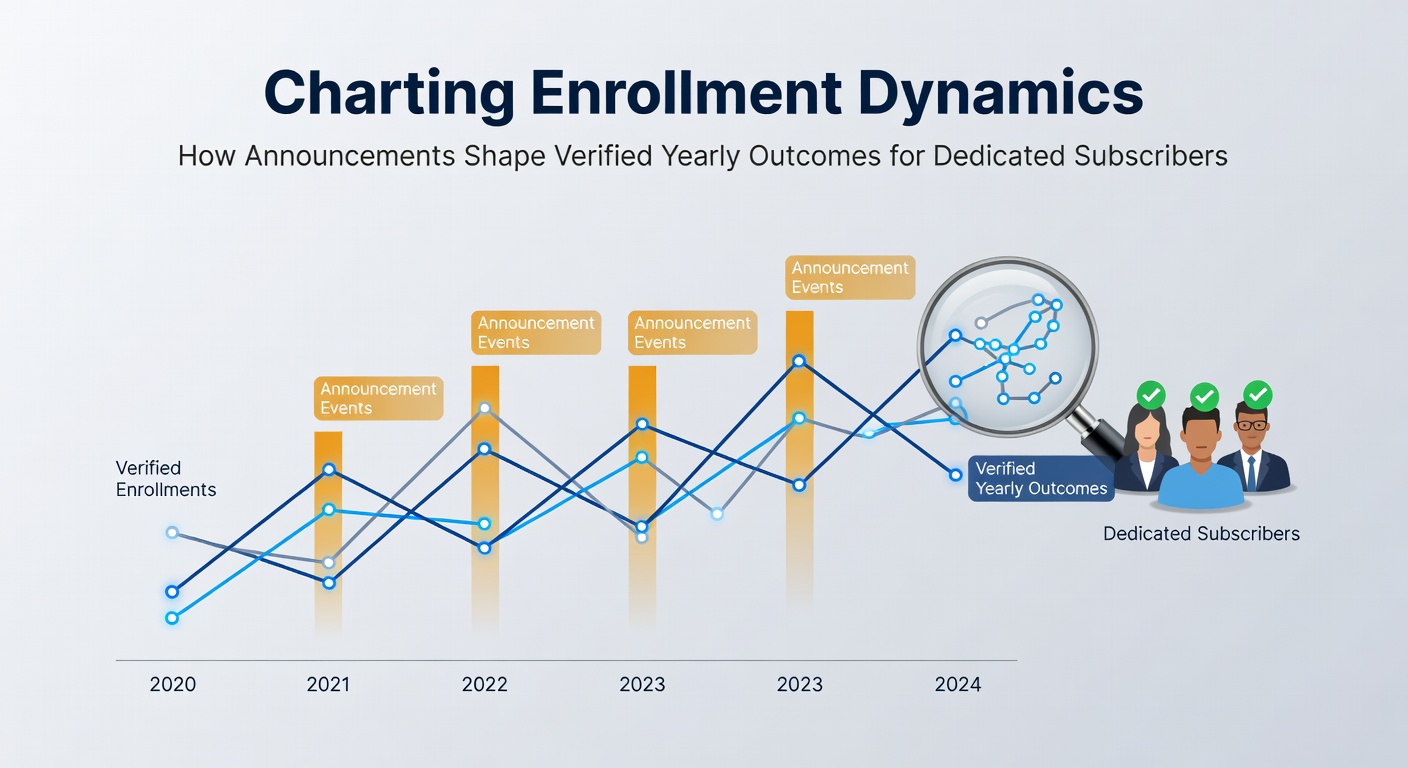
Enrollment patterns in specialized subscription services follow distinct cycles where public announcements play a central role in shaping how new participants join and how their results unfold over full calendar years. Data from multiple industry tracking systems shows that timed releases of performance summaries often coincide with measurable upticks in verified signups, particularly when those summaries include detailed profit and loss figures from existing members. Observers note that these announcements tend to cluster around key calendar points, creating predictable waves of interest that services then convert into active accounts with ongoing monitoring tools.
Announcement Timing and Initial Signup Patterns
Services release detailed reports on member trajectories at regular intervals, and these moments frequently align with fresh enrollment surges according to aggregated platform statistics. When summaries highlight consistent yearly returns tracked through dedicated monitoring systems, prospective participants respond by initiating the signup process within days of the release. Researchers tracking these movements across several platforms have documented that announcements issued during the first quarter often produce the strongest initial response rates, while mid-year updates sustain momentum among those who joined earlier but seek additional verification of ongoing performance.
One study from the University of Nevada, Las Vegas gaming research division found that services employing transparent reporting structures experienced enrollment increases ranging from 18 to 34 percent in the two weeks following major result publications. These figures come from anonymized account creation logs that services share with academic partners under controlled data agreements. The same research indicates that announcements emphasizing verified outcomes rather than projected estimates generate higher retention rates once the initial signup period concludes.
Verification Processes and Yearly Outcome Tracking
Once individuals complete enrollment, platforms implement structured verification protocols that record every transaction and outcome throughout the subscription year. These protocols rely on automated logging combined with periodic manual audits, producing datasets that services later aggregate for public release. Participants receive access to personalized dashboards showing cumulative performance against benchmarks established at the start of their membership period.

By May 2026, several platforms had already published interim verification summaries covering the first four months of activity for cohorts that joined during the previous autumn enrollment wave. These summaries revealed that members utilizing full tracking features maintained steadier performance curves compared with those who accessed only basic reporting tools. The differences appear in the variance measurements rather than absolute profit totals, suggesting that consistent monitoring helps stabilize outcomes across varying market conditions.
Long-Term Dynamics and Cohort Comparisons
Longer-term comparisons between enrollment cohorts demonstrate that announcement content influences not only initial signup volume but also the distribution of results observed at the twelve-month mark. Cohorts exposed to announcements that included both positive and neutral performance examples tended to show narrower spreads in final verified returns. In contrast, announcements focused exclusively on top-performing accounts correlated with wider outcome variation once the full year concluded.
Industry reports compiled by the American Gaming Association highlight similar patterns across subscription-based analytical services operating in regulated markets. Those reports emphasize that transparent disclosure of both successful and unsuccessful periods builds more durable subscriber relationships, measured through renewal rates and continued engagement with verification systems. Data collected from services operating in multiple jurisdictions supports the observation that detailed reporting reduces early termination rates during the first six months of membership.
External Factors Affecting Enrollment Response
Broader market conditions and regulatory developments also interact with announcement effects. When external events create uncertainty in betting markets, announcements that provide clear methodological explanations tend to attract participants seeking structured approaches. Australian research published through the Victorian Responsible Gambling Foundation examined how disclosure practices influence participant behavior in analytical subscription models, finding that services publishing methodology alongside results experienced more stable enrollment flows during periods of market volatility.
Services that integrate these external insights into their announcement strategies often see compounding benefits across successive enrollment cycles. The combination of internal performance data with contextual market information appears to strengthen the connection between announcement timing and sustained yearly outcomes for those who remain engaged through the full verification period.
Conclusion
Patterns emerging from enrollment data and verification records indicate that announcement strategies directly shape both the volume and the quality of yearly outcomes recorded for dedicated subscribers. Platforms that align release schedules with comprehensive reporting continue to demonstrate measurable differences in cohort performance at the annual mark. These dynamics suggest ongoing evolution in how services structure their communications and verification frameworks to support consistent participant results across varying enrollment periods.